Are garage door seal problems letting water, pests, and cold air invade your garage? Furthermore, a failing garage door bottom seal exposes your garage to flooding, rodent entry, and significant energy loss throughout every season. Moreover, recognizing seal deterioration signs helps homeowners address problems before water damage or pest infestations develop. Consequently, whether you need garage door seal replacement or a simple bottom seal repair, finding professional help for garage door seal problems near you keeps your garage protected and energy efficient. In addition, understanding garage door seal replacement cost helps you plan for this affordable but essential maintenance.
Why Your Garage Door Seal Matters
Specifically, the garage door seal is the flexible strip along the bottom edge of your door that contacts the garage floor when closed. Furthermore, this seal creates a barrier between your garage interior and the outside environment, blocking water, wind, debris, insects, and rodents. Moreover, a properly functioning seal maintains consistent garage temperatures and prevents moisture from reaching stored items and vehicles. Consequently, when garage door seal problems develop, your garage becomes vulnerable to everything the seal was designed to block. In addition, a damaged seal allows cold drafts to enter through shared walls, forcing your HVAC system to work harder.
Common Garage Door Seal Problems
Additionally, understanding the most frequent seal issues helps homeowners identify when replacement is needed. Therefore, watch for these common failures.
Cracked and Brittle Seal Material
Moreover, rubber and vinyl seals degrade over time:
- Specifically, UV exposure from sunlight dries out and cracks seal material
- Furthermore, extreme temperature swings cause the seal to harden and lose flexibility
- Additionally, chemical exposure from road salt or garage floor cleaners accelerates breakdown
- Consequently, cracked seals create gaps that allow water and air to pass freely underneath
Therefore, cracked and brittle material is the most common of all seal deterioration signs.
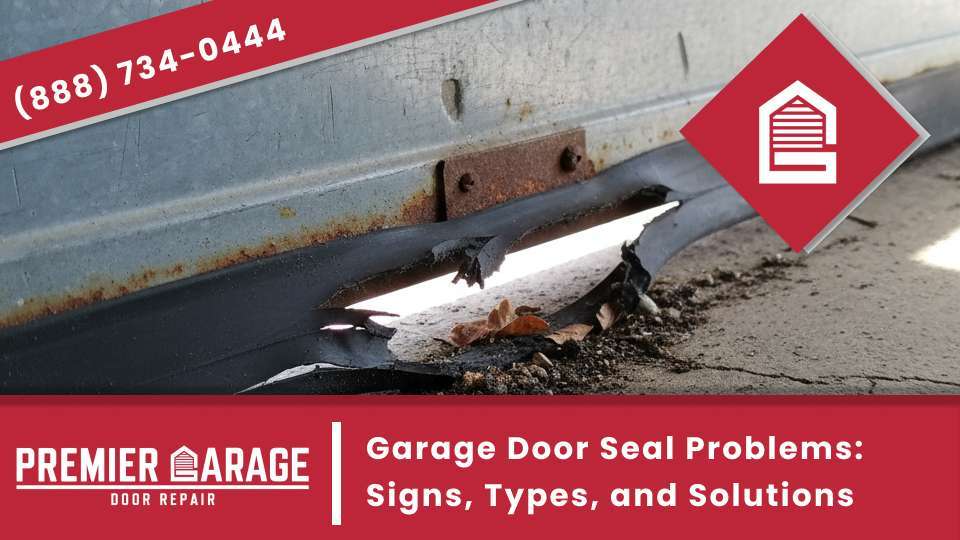
Torn or Missing Seal Sections
Similarly, physical damage removes seal protection entirely:
- Specifically, the door closing on debris tears chunks from the seal
- Furthermore, rodents chew through seal material to gain garage access
- Moreover, improper door alignment causes the seal to drag and rip
- Additionally, age-related brittleness causes sections to break off completely
Consequently, torn or missing seal sections leave your garage exposed to the elements and pests.
Compressed or Flattened Seal
Likewise, seals lose their shape from constant pressure:
- Specifically, years of compression against the floor permanently flatten the seal
- Furthermore, a flattened seal no longer makes full contact across the door width
- Moreover, uneven garage floors create gaps where compressed seals cannot reach
- Additionally, heavy doors accelerate seal compression compared to lighter models
Hence, a compressed seal fails to create an effective barrier even when the door appears fully closed.
Seal Deterioration Signs Every Homeowner Should Know
Furthermore, several warning signs indicate your garage door seal needs attention.
Visual Seal Deterioration Signs
Moreover, look for these visible indicators:
- Specifically, daylight visible beneath the closed garage door
- Furthermore, visible cracks, tears, or missing sections along the seal
- Moreover, the seal hangs loosely or has pulled out of the retainer channel
- Additionally, discoloration or hardening of previously flexible seal material
In addition, these visible seal deterioration signs mean the barrier is already compromised.
Evidence-Based Warning Signs Of Garage Door Seal Problems
Similarly, indirect evidence reveals seal failure:
- Specifically, water puddles appearing inside the garage after rainstorms
- Furthermore, leaves, dirt, or debris accumulating just inside the door
- Moreover, pest droppings or insect activity near the door bottom
- Additionally, cold drafts felt near the garage door during winter
Consequently, these problems confirm that garage door seal problems are allowing outside elements into your garage.
Types of Garage Door Seals
Furthermore, understanding seal types helps you choose the right garage door seal replacement option.
T-Style Bottom Seal
Moreover, T-shaped seals are the most common residential option:
- Specifically, slides into a retainer channel attached to the bottom of the door
- Furthermore, dual-contact design seals against both flat and uneven surfaces
- Moreover, easy to replace without removing the retainer
- Additionally, available in rubber, vinyl, and thermoplastic materials
Bulb-Style Bottom Seal
Similarly, bulb seals offer a round profile:
- Specifically, round or P-shaped cross-section compresses against the floor
- Furthermore, works well on smooth, level garage floors
- Moreover, provides good sealing on doors with minimal floor gap
- Additionally, less effective on uneven or cracked concrete surfaces
Threshold Seal
Likewise, threshold seals mount to the floor instead of the door:
- Specifically, adheres to the garage floor creating a raised barrier
- Furthermore, works with any door type regardless of bottom seal condition
- Moreover, excellent for keeping water out on sloped driveways
- Additionally, can be combined with a bottom seal for double protection
Consequently, threshold seals provide an effective secondary defense against water intrusion.
Garage Door Seal Replacement Cost
Moreover, understanding garage door seal replacement cost helps homeowners plan this affordable maintenance.
Cost Factors
Specifically, several variables influence your total garage door seal replacement cost:
- Furthermore, door width with single-car versus double-car sizes
- Moreover, seal material and style selection
- Additionally, whether the retainer channel needs replacement too
- Consequently, professional installation versus DIY application
Average Pricing
In addition, typical costs for garage door seal replacement include:
- Specifically, basic rubber bottom seal material costs $10 to $30
- Furthermore, premium vinyl or thermoplastic seals run $20 to $50
- Moreover, threshold seals cost $30 to $80 depending on length
- Additionally, professional installation adds $50 to $150 for labor
Therefore, garage door seal replacement cost is one of the most affordable garage door repairs available.
Bottom Seal Repair vs Complete Replacement
Furthermore, deciding between bottom seal repair and complete garage door seal replacement depends on the extent of damage.
When Repair Works For Garage Door Seal Problems
Moreover, bottom seal repair makes sense when:
- Specifically, the seal has slipped out of the retainer but is still in good condition
- Furthermore, minor gaps exist that can be corrected with retainer adjustment
- Moreover, the seal material is still flexible and undamaged
- Additionally, only the end sections need trimming or repositioning
When Full Replacement Is Needed
Similarly, complete replacement becomes necessary when:
- Specifically, the seal is cracked, torn, or hardened beyond repair
- Furthermore, large sections are missing or compressed flat
- Moreover, the retainer channel is bent, rusted, or broken
- Additionally, the existing seal type is incompatible with your floor surface
Consequently, full replacement with the correct seal type ensures proper protection against all garage door seal problems.
Preventing Future Garage Door Seal Problems
Additionally, simple maintenance extends seal life significantly.
Maintenance Tips
Furthermore, follow these prevention strategies:
- Specifically, clean the seal and floor contact area quarterly to remove debris
- Furthermore, apply silicone-based lubricant to keep rubber seals flexible
- Moreover, inspect the seal visually every season for cracks or gaps
- Additionally, keep the garage floor clean where the seal contacts the surface
- Consequently, schedule professional garage door maintenance that includes seal inspection
In addition, the Door and Access Systems Manufacturers Association recommends inspecting garage door seals at least twice per year for optimal protection.
Final Thoughts on Garage Door Seal Problems
In fact, garage door seal problems may seem minor but they lead to water damage, pest infestations, energy waste, and uncomfortable garage temperatures when ignored. Moreover, recognizing seal deterioration signs like visible cracks, daylight gaps, and water intrusion helps you act before secondary damage develops. Furthermore, understanding your garage door seal replacement cost and bottom seal repair options ensures you choose the most effective and affordable solution.
Consequently, don’t let a worn seal compromise your garage’s protection. Therefore, contact a qualified professional for garage door seal problems near you today and restore a tight, weather-resistant barrier. In addition, regular inspection and timely replacement keep your garage sealed, dry, and energy efficient year-round.
Phone: (888) 734-0444
Email: info@premiergaragerepair.net
Website: https://www.premiergaragerepair.net/