Is your garage door opener humming without moving the door, running intermittently, or failing completely? Garage door opener problems disrupt daily routines and, in many cases, compromise home security. When issues develop, a garage door opener not working situation leaves you manually operating a heavy door. Fortunately, professional garage door opener repair diagnoses the cause accurately and restores function quickly. In addition, quality service work addresses root causes rather than symptoms. However, when repair isn’t practical, garage door opener replacement provides modern features and reliability. Moreover, expert installation ensures proper function for years. Therefore, if your opener shows signs of failure, scheduling garage door opener repair near you restores convenient, reliable daily access to your home.
Understanding Garage Door Opener Problems
Before exploring specific problems, understanding how openers function helps homeowners troubleshoot effectively.
How Openers Work
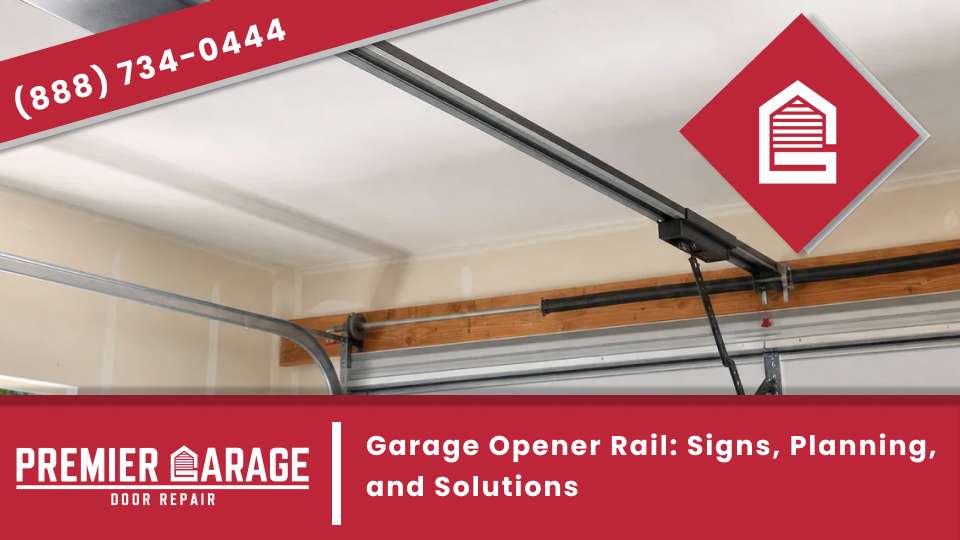
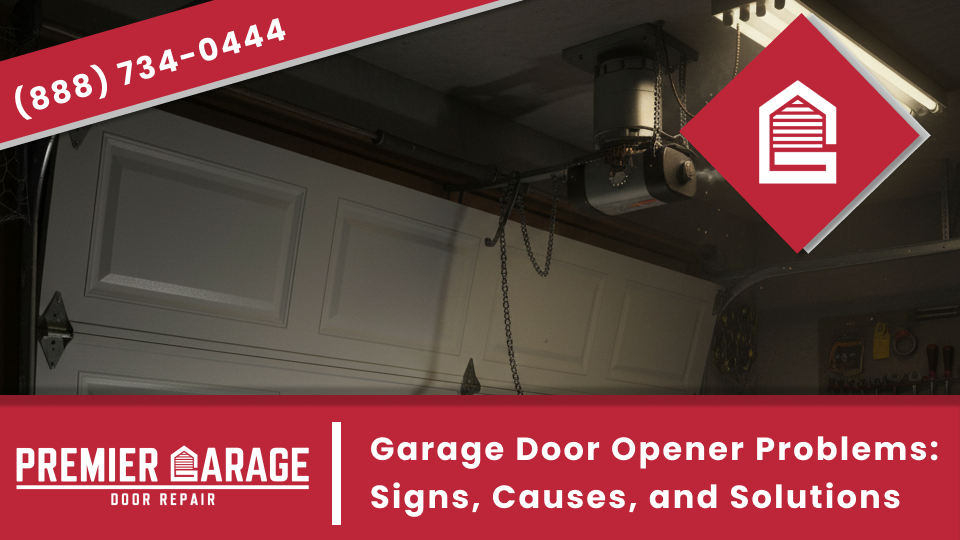
Openers provide motorized control of your garage door. Generally, the motor unit mounts to the ceiling and connects to the door via a rail system. When activated, the motor drives a chain, belt, or screw mechanism. In turn, this mechanism pulls or pushes the trolley connected to your door.
Furthermore, the system includes safety features like auto-reverse sensors and manual release. Additionally, modern openers include rolling code technology for security.
Opener Types for Garage Door Opener Issues
Notably, different drive systems have unique characteristics:
- Chain drive openers are affordable but louder during operation
- Belt drive openers operate quietly with minimal vibration
- Screw drive openers have fewer parts but may need more maintenance
- Direct drive openers feature the motor itself moving along the rail
According to the International Door Association, most residential openers last ten to fifteen years with proper maintenance.
Signs of Garage Door Opener Not Working
Importantly, recognizing garage door opener not working situations early helps identify the problem source.
Motor Runs But Door Doesn’t Move
This common symptom typically indicates drive system problems. The motor hums or runs normally, while the door remains stationary despite motor activity. In some cases, the trolley may be disconnected from the door. Additionally, the drive gear or belt may have failed.
Either way, this confirms garage door opener malfunction in the drive mechanism.
Opener Doesn’t Respond at All
In addition, complete failure has several possible causes:
- No power reaching the unit
- Circuit board has failed
- Motor has burned out
- Safety sensors blocking operation
- Remote or wall button malfunction
Generally, no response indicates significant garage door opener issues requiring diagnosis.
Intermittent Operation Regarding Garage Door Opener Issues
Unreliable function frustrates homeowners daily. For instance, the opener works sometimes but not others. Often, performance seems random or unpredictable. Furthermore, problems may worsen over time. Typically, intermittent issues suggest developing component failure.
Door Reverses Unexpectedly
Notably, reversal problems affect normal operation in a few ways:
- The door starts closing then reverses immediately
- Reversal happens before the door touches the floor
- Random reversal occurs at unpredictable points
- Force settings may need adjustment
In any case, reversal issues require professional evaluation.
Unusual Noises from Opener
Sound changes often indicate developing problems. Specifically, grinding suggests gear or drive damage, while clicking indicates electrical relay issues. Meanwhile, humming without movement points to motor strain. Finally, rattling may signal loose mounting or components.
Therefore, strange sounds warrant prompt attention.
Common Causes of Garage Door Opener Problems
Understanding what causes garage door opener problems helps guide effective solutions.
Electrical Issues
First, power problems frequently affect opener function:
- Power outages reset programming
- Voltage fluctuations damage circuits
- Worn wiring creates intermittent connections
- Faulty outlets provide inconsistent power
- Surge damage destroys sensitive components
In fact, electrical issues cause many garage door opener issues homeowners experience.
Motor Wear and Failure
Generally, motors have finite lifespans regardless of brand. Specifically, bearings wear from constant operation, while windings degrade over time. Additionally, overheating damages internal components. Typically, age-related motor failure is common after ten years.
Drive System Damage
Furthermore, the mechanism connecting motor to door wears in several ways:
- Chain stretches and loses tension
- Belt cracks or breaks from age
- Screw drive needs lubrication regularly
- Gears strip from strain or wear
- Trolley components break from stress
As a result, drive damage prevents door movement despite motor operation.
Logic Board Failure Regarding Garage Door Opener Issues
The circuit board controls all opener functions. Naturally, electronics degrade over time. In addition, power surges damage sensitive circuits. Consequently, failed boards cause erratic behavior. Often, replacement is more practical than repair.
Safety System Problems
In some cases, safety features can prevent operation:
- Misaligned photo eye sensors
- Dirty sensor lenses blocking the beam
- Damaged sensor wiring
- Obstruction in door path
- Force settings too sensitive
However, safety system issues often mimic garage door opener malfunction.
Garage Door Opener Repair Options
Notably, several approaches address problems depending on the cause.
Garage Door Opener Repair for Electrical Issues
Specifically, addressing power problems involves several steps:
- Verify the outlet provides consistent power
- Check whether the circuit breaker has tripped
- Test GFCI outlets and reset if needed
- Inspect wiring for visible damage
- Consider surge protector installation
Generally, electrical garage door opener fix work resolves intermittent problems.
Garage Door Opener Repair for Drive Systems
Similarly, addressing mechanism problems requires specific solutions:
- Chain adjustment restores proper tension
- Belt replacement addresses cracking or breaks
- Gear replacement fixes stripped components
- Lubrication helps screw drive systems
- Trolley repair restores door connection
In most cases, drive system repair provides effective solutions.
Garage Door Opener Fix for Safety Systems
Likewise, addressing sensor problems involves these steps:
- Align photo eye sensors properly
- Clean sensor lenses thoroughly
- Repair or replace damaged wiring
- Adjust force and travel settings
- Remove obstructions from door path
Often, safety system adjustments resolve many operational issues.
When Repair Isn’t Sufficient
Notably, some situations require replacement:
- The motor has burned out completely
- Logic board failure on an older unit
- Multiple components failing simultaneously
- Repair costs approach replacement price
- The unit is over fifteen years old
Ultimately, severe damage requires garage door opener replacement rather than repair.
Garage Door Opener Replacement
When repair isn’t practical, replacement provides reliability and modern features.
When Replacement Makes Sense
Generally, consider garage door opener service for new installation when:
- Repair costs exceed fifty percent of replacement
- Your opener is approaching or past fifteen years old
- Multiple repairs have already been made
- You want modern features like smartphone control
- The current opener lacks adequate safety features
Choosing a New Opener
Specifically, several factors guide selection for replacement:
- Drive type based on noise tolerance
- Horsepower appropriate for door weight
- Smart features for remote monitoring
- Battery backup for power outages
- Security features like rolling codes
Replacement Process
Generally, professional garage door opener replacement involves:
- Removing the old opener completely
- Installing new mounting hardware
- Connecting the new opener to power
- Programming remotes and keypads
- Adjusting force and travel settings
- Testing all safety features
- Demonstrating operation to the homeowner
Finding Garage Door Opener Repair Near You
When opener problems require professional attention, choosing qualified service matters.
What to Expect from Professional Service
When scheduling garage door opener repair near you, expect thorough attention. Initially, complete diagnosis identifies the root cause accurately. Then, clear explanation helps you understand options. Additionally, a written estimate details costs before work begins. Finally, quality workmanship ensures lasting results.
Finding Quality Service Providers
Specifically, look for these qualifications:
- Experience with multiple opener brands
- Licensed and insured company
- Positive customer reviews
- Same-day service available
- Fair, transparent pricing
- Written warranties on work
Cost Considerations
Naturally, repair and replacement costs vary by issue. Typically, minor repairs and adjustments cost fifty to one hundred fifty dollars. In contrast, motor or board replacement costs one hundred fifty to three hundred dollars. Meanwhile, new opener installation costs three hundred to six hundred dollars including the unit.
Therefore, consider costs against opener age and condition.
Preventing Garage Door Opener Problems
Indeed, proper care extends opener life significantly.
Regular Testing
First, verify operation monthly:
- Test remote and wall button function
- Check the safety reversal feature
- Listen for unusual sounds
- Watch for smooth operation
- Note any changes in performance
Maintenance Tasks
Notably, simple care prevents many problems:
- Tighten mounting hardware annually
- Lubricate moving parts as recommended
- Keep sensors clean and aligned
- Replace remote batteries proactively
- Clear debris from the rail system
Protect from Power Issues
Importantly, electrical protection extends opener life:
- Install a surge protector for the opener
- Consider a battery backup system
- Report frequent power fluctuations
- Avoid extension cords for power
Know When to Call Professionals
Most importantly, don’t delay needed service:
- Address unusual sounds promptly
- Pay attention to intermittent problems
- Schedule annual professional inspections
- Replace aging units proactively
Final Thoughts
Garage door opener problems disrupt daily routines and, ultimately, compromise home security. A garage door opener not working situation or garage door opener malfunction requires prompt attention to restore convenient access.
Recognizing signs of garage door opener issues helps identify whether simple adjustments or professional service is needed. Often, many problems respond well to garage door opener repair when addressed promptly.
However, when repair isn’t practical, garage door opener replacement provides reliability and modern features. Furthermore, expert garage door opener fix work and garage door opener service ensure proper function for years.
Don’t struggle with an unreliable opener. Instead, schedule garage door opener repair near you with qualified technicians to restore convenient, reliable access to your garage.
Phone: (888) 734-0444
Email: info@premiergaragerepair.net
Website: https://www.premiergaragerepair.net/