Garage door lubrication keeps every moving part operating smoothly, quietly, and safely throughout the life of your door. When you lubricate your garage door properly, you prevent premature wear, reduce noise, and extend the lifespan of springs, rollers, hinges, and tracks. Following a garage door lubrication schedule ensures you never miss the maintenance that prevents costly breakdowns. Furthermore, knowing how often to lubricate your garage door removes the guesswork from your home maintenance routine. Choosing the best garage door lubricant makes a significant difference in performance and protection. In addition, understanding the right garage door lubricant type for each component prevents damage from using the wrong product. A garage door lubrication service from a trained technician covers every moving part and includes a full system inspection.
Likewise, professional garage door lubrication catches developing problems that homeowners typically miss during routine maintenance. If your door sounds loud or moves roughly, search for garage door lubrication near you to get expert service.
Why Garage Door Lubrication Matters
Garage door lubrication is one of the simplest and most effective maintenance tasks you can perform. Specifically, your garage door contains dozens of metal parts that rub against each other thousands of times per year.
Here is why regular lubrication is essential:
- Reduces friction between metal components that grind and wear each other down
- Prevents rust and corrosion on springs, hinges, rollers, and tracks
- Eliminates squeaking, grinding, and rattling sounds during operation
- Extends the lifespan of springs by reducing stress from dry operation
- Lowers the strain on your opener motor so it runs cooler and lasts longer
- Keeps the door moving smoothly so it stays balanced and aligned
- Costs almost nothing but prevents repairs worth hundreds of dollars
Because a standard residential garage door opens and closes roughly 1,500 times per year, dry components deteriorate rapidly. Therefore, consistent garage door lubrication protects your entire system from preventable damage.
What Parts of Your Garage Door Need Lubrication
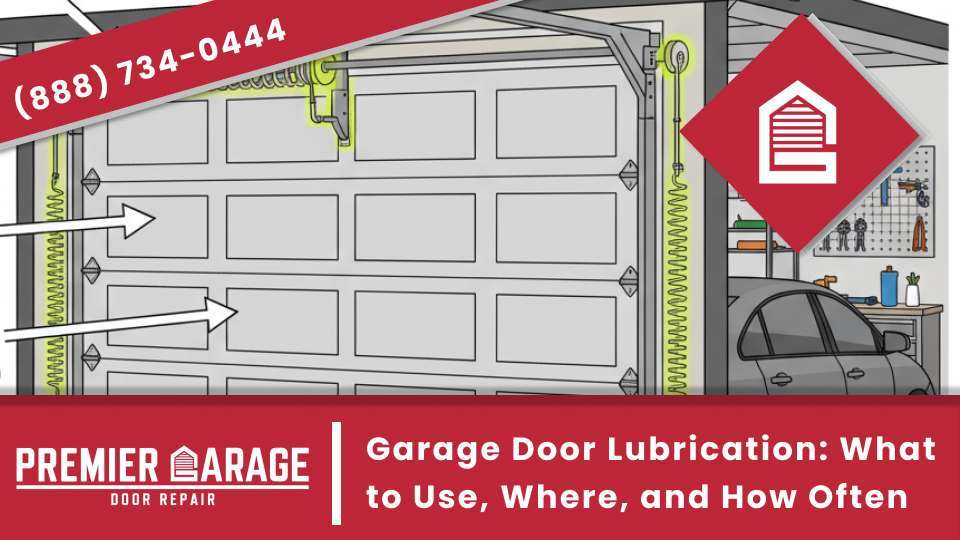
Not every part of your garage door needs lubrication. Specifically, applying lubricant to the wrong areas can actually cause problems. Furthermore, knowing exactly where to lubricate your garage door ensures maximum benefit.
Springs Your torsion or extension springs carry the full weight of the door. Furthermore, dry springs generate friction that shortens their lifespan and creates noise. In addition, apply lubricant along the entire length of each coil so it penetrates between the coils.
Hinges Each hinge pivot point needs lubrication where the pin meets the hinge plate. Consequently, well-lubricated hinges allow panels to fold smoothly without grinding or binding. Moreover, focus on the pivot hole where metal contacts metal.
Rollers Steel and nylon rollers both benefit from lubrication at the bearing point where the roller meets the stem. However, only lubricate the bearing itself. Furthermore, do not apply lubricant to the roller surface that contacts the track.
Lock mechanism The lock and latch mechanism on the side of the door needs lubrication to operate freely. In addition, spray lubricant into the keyhole and work the lock several times to distribute it evenly.
Track contact points Apply a very light coat of lubricant to the curved section of the track where the rollers transition from vertical to horizontal. However, do not coat the entire track because excess lubricant attracts dirt and creates buildup.
Parts you should NOT lubricate:
- The straight vertical sections of the track — rollers need grip here, not slip
- Also, the bottom rubber weather seal — lubricant degrades rubber
- Furthermore, the chain or belt drive on the opener — these have their own lubrication requirements
Choosing the Best Lubricant
The best garage door lubricant protects metal, resists dust accumulation, and lasts between applications. Specifically, not all lubricants work well for garage door components.
White lithium grease White lithium grease is the most recommended garage door lubricant type for springs, hinges, and lock mechanisms. Furthermore, it stays in place on vertical surfaces and does not drip. In addition, it provides long-lasting protection against friction and moisture. Consequently, white lithium grease is the best garage door lubricant for most applications.
Silicone-based spray Silicone spray works well as a garage door lubrication for rollers, tracks, and weatherstripping contact points. Furthermore, it does not attract dust the way petroleum-based products do. However, silicone spray dries faster than lithium grease and needs more frequent reapplication.
Garage door specific lubricant Several manufacturers produce lubricants designed specifically for garage door components. Specifically, these products combine the staying power of grease with the clean application of spray. Moreover, they are formulated to resist temperature extremes common in garages.
Products to avoid:
- WD-40 is not a lubricant — it is a solvent and degreaser that dries out quickly and attracts dust
- Also, motor oil drips off vertical surfaces and stains the garage floor
- Furthermore, petroleum jelly attracts dirt and creates sticky buildup on tracks and rollers
Choosing the right garage door lubricant type for each component ensures lasting protection between maintenance intervals.
Garage Door Lubrication Schedule
Following a garage door lubrication schedule prevents the noise, wear, and breakdowns that come from dry components. Furthermore, knowing how often to lubricate your garage door depends on your climate and usage.
Every 6 months (standard use) Most homeowners should lubricate their garage door every six months. Specifically, schedule lubrication in spring and fall to prepare for the temperature extremes of summer and winter. Furthermore, this twice-yearly schedule works well for homes that open and close the door two to four times daily.
Every 3 months (heavy use) Homes that use the garage door more than six times daily should lubricate every three months. In addition, households with multiple drivers who enter and exit through the garage fall into this category. Consequently, more frequent lubrication offsets the accelerated wear from heavy use.
Monthly (harsh environments) Garages in coastal areas, extremely humid climates, or dusty environments need monthly lubrication. Furthermore, salt air, high humidity, and dust all accelerate corrosion and friction on metal components. Therefore, monthly application prevents environmental damage between regular maintenance intervals.
After any unusual sounds Regardless of your regular garage door lubrication schedule, always lubricate immediately if you hear new squeaking, grinding, or scraping sounds. Consequently, these sounds indicate dry components that need attention before wear becomes permanent.
How to Lubricate Your Garage Door Step by Step
Lubricating your garage door takes less than fifteen minutes and requires no special tools. Furthermore, this simple process covers every component that needs attention.
Step 1: Close the door First, close the garage door completely so you can access the springs and upper hardware. Furthermore, disconnect the opener by pulling the emergency release handle.
Step 2: Lubricate the springs Next, spray white lithium grease a garage door lubrication along the entire length of each torsion spring above the door. Specifically, coat the coils evenly so lubricant works between them. Furthermore, wipe excess drips with a rag to prevent them from falling on the door.
Step 3: Lubricate the hinges Then, apply lubricant to each hinge pivot point where the pin enters the hinge plate. In addition, work the door slightly back and forth to help the lubricant penetrate the pivot hole.
Step 4: Lubricate the rollers After the hinges, apply a small amount of lubricant to the bearing on each roller. However, avoid getting lubricant on the roller surface or the track. Furthermore, spin each roller by hand to distribute the lubricant evenly.
Step 5: Lubricate the lock and tracks Finally, spray lubricant into the lock mechanism and apply a light coat to the curved track sections only. Consequently, operate the lock and open the door manually to distribute the lubricant. Moreover, reconnect the opener and run the door through two complete cycles.
This process covers every component that benefits from garage door lubrication. Therefore, following these steps consistently prevents the most common mechanical problems.
When to Call a Professional
Some situations benefit from professional garage door lubrication service rather than DIY maintenance. Therefore, contact a technician for garage door lubrication near you if any of the following apply:
- Your door still makes noise after you have lubricated all components
- Springs appear rusty, stretched, or have gaps between coils
- Rollers are cracked, chipped, or wobble on their stems
- You are uncomfortable working near springs under high tension
- The door has not been lubricated in over a year and operates roughly
- You want a complete inspection along with the lubrication service
A professional garage door lubrication service includes lubrication of every moving part plus a full safety and operational inspection. Specifically, they check spring tension, roller condition, cable integrity, track alignment, and opener performance. In addition, they identify developing problems that lubrication alone cannot fix.
Do not wait for grinding sounds or a stuck door to remind you about maintenance. Instead, call today to schedule your professional garage door lubrication and keep your door running smoothly for years to come.
Phone: (888) 734-0444
Email: info@premiergaragerepair.net
Website: https://www.premiergaragerepair.net/