Garage door weatherstripping problems let cold air, hot air, water, pests, and debris pour into your garage through gaps around the door. Identifying garage door weatherstrip issues early prevents energy waste, water damage, and pest infestations. Garage door bottom seal replacement is the most common weatherstripping repair because the bottom seal takes the most abuse from daily contact with the ground. Furthermore, knowing when to replace your garage door bottom seal prevents moisture from pooling under your door and damaging your garage floor. Understanding garage door weatherstripping types helps you choose the right seal for your door style and climate. In addition, comparing garage door seal types ensures you get a product that lasts and performs in your specific conditions. Garage door drafts waste energy and make adjacent rooms uncomfortable year-round.
Likewise, garage door air leaks force your HVAC system to work harder and increase your monthly utility bills. If you feel drafts or see daylight around your garage door, search for garage door weatherstripping problems near you to get a professional assessment.
Signs Your Garage Door Weatherstripping Needs Attention
Garage door weatherstripping problems develop gradually and often go unnoticed until the effects become severe. However, several clear signs indicate your seals need repair or replacement.
Here are the most common signs of garage door weatherstrip issues:
- Visible daylight showing along the bottom, sides, or top of the closed door
- Also, water puddles inside the garage near the door after rain
- Furthermore, leaves, dirt, and debris blowing in under or around the door
- A noticeable temperature difference between the garage and the outdoors disappears
- Additionally, increased energy bills without changes to your thermostat settings
- Insects, mice, or other pests entering through gaps in the seals
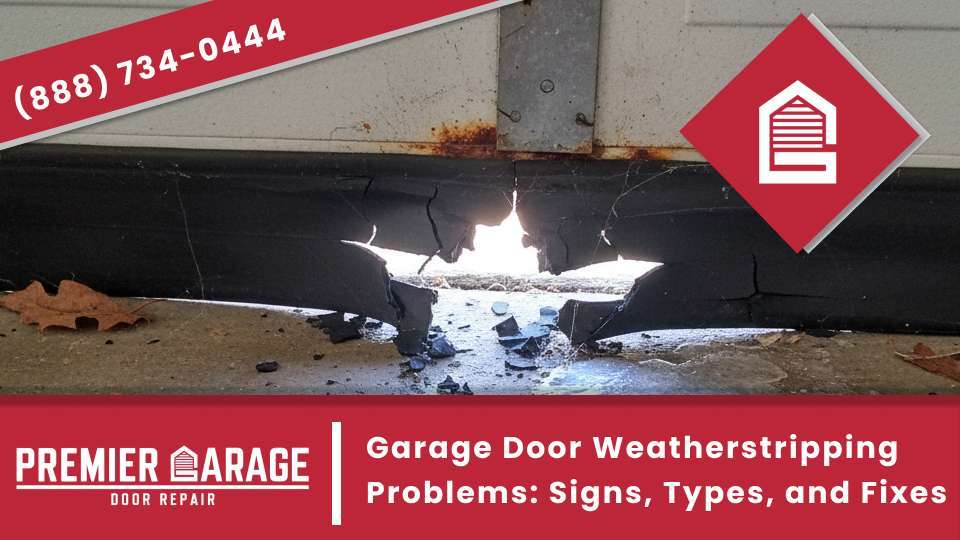
- The bottom seal appears cracked, torn, flattened, or missing sections
- Finally, cold drafts blowing through the garage into adjacent rooms
Because weatherstripping deteriorates slowly, many homeowners adapt to the gradual changes without realizing how much protection they have lost. Therefore, inspecting your seals at least twice per year catches problems before they cause significant damage.
How Garage Door Weatherstripping Works
Weatherstripping creates a seal between your garage door and the door frame on all four sides. Specifically, each seal serves a different purpose and faces different conditions.
Bottom seal (astragal) The bottom seal attaches to the lowest panel and compresses against the garage floor when the door closes. Furthermore, it blocks water, wind, debris, and pests from entering under the door. In addition, the bottom seal endures the most wear because it contacts rough concrete with every cycle.
Side seals (jamb seals) Side seals run vertically along both sides of the door frame. Consequently, they close the gap between the door edge and the frame. Furthermore, side seals prevent wind-driven rain and drafts from entering through the sides.
Top seal (header seal) The top seal mounts on the header above the door and seals the gap at the top when the door closes. In addition, it prevents rain from dripping down between the door and the frame.
Panel joint seals Some doors include seals between panel sections that prevent air and water from passing through the panel joints. Furthermore, these seals reduce drafts and improve the door’s overall insulation value.
Because each seal protects a different area, garage door weatherstripping problems in any one location compromise the entire system. Therefore, inspecting all four seal areas ensures complete protection.
Common Causes of Garage Door Weatherstripping Problems
Garage door weatherstrip issues develop from daily wear, environmental exposure, and age-related deterioration. Specifically, understanding these causes helps you prevent premature seal failure.
Normal compression wear The bottom seal compresses against the floor 1,500 or more times per year. Consequently, the rubber or vinyl gradually flattens and loses its ability to create a tight seal. Furthermore, rough or uneven concrete surfaces accelerate compression wear.
UV damage Sunlight degrades rubber and vinyl weatherstripping over time. As a result, the material becomes brittle, cracks, and eventually breaks apart. Moreover, south-facing garage doors experience the most UV exposure and fastest seal deterioration.
Temperature extremes Extreme heat softens weatherstripping and causes it to deform permanently. Furthermore, extreme cold makes rubber and vinyl stiff and brittle. In addition, freeze-thaw cycles crack seals that have already begun to deteriorate.
Chemical exposure Gasoline, oil, solvents, and salt contact the bottom seal regularly in most garages. Consequently, these chemicals break down rubber and vinyl compounds. Furthermore, road salt tracked in by vehicles during winter corrodes seals from the inside out.
Improper installation Weatherstripping installed without proper fit, adhesive, or retainer channels falls out or bunches up during operation. As a result, gaps form that defeat the purpose of the seal entirely. Moreover, using the wrong garage door seal types for your specific door causes premature failure.
Garage Door Weatherstripping Types Explained
Understanding garage door weatherstripping types helps you choose the best replacement for your door. Specifically, each garage door seal type offers different durability, flexibility, and installation methods.
T-style bottom seal T-shaped seals slide into a retainer channel on the bottom panel. Furthermore, they are the most common and easiest to replace. In addition, the T-shape creates a double-lip seal that conforms to uneven floors.
Bulb-style bottom seal Bulb seals feature a round tube shape that compresses against the floor. Consequently, they provide an excellent seal on smooth flat surfaces. However, they work less effectively on rough or uneven concrete.
Beaded-style bottom seal Beaded seals have round edges that snap into grooves on the bottom panel. Furthermore, they are common on older garage doors. In addition, they are less durable than T-style seals but easy to install.
Brush-style seal Brush seals use dense bristles that conform to irregular surfaces. Specifically, they work well for garages with extremely uneven floors. However, they provide less insulation and weather protection than rubber or vinyl seals.
Vinyl flap seal Vinyl flap seals are the most affordable option and attach with adhesive or screws. Furthermore, they are easy to install as a DIY project. However, they wear out faster than T-style or bulb seals.
Choosing the right garage door weatherstripping types for your specific door and climate ensures the longest lifespan and best performance.
Garage Door Bottom Seal Replacement Step by Step
Garage door bottom seal replacement is the most common weatherstripping repair. Furthermore, knowing when to replace your garage door bottom seal and how the process works helps you plan the repair.
Step 1: Identify your seal type First, examine your current bottom seal to determine whether it is T-style, bulb, beaded, or adhesive. Furthermore, check if your bottom panel has a retainer channel or if the seal attaches directly to the panel.
Step 2: Remove the old seal Next, slide the old seal out of the retainer channel from one end. Specifically, pull steadily and use pliers if the seal is stuck. Furthermore, clean the channel of dirt and debris after removal.
Step 3: Measure and cut the new seal Then, measure the width of your garage door and cut the new seal one inch longer than the opening. Consequently, the extra length ensures a tight fit at both ends.
Step 4: Install the new seal After cutting, slide the new seal into the retainer channel from one end. Furthermore, apply a small amount of dish soap to the channel to help the seal slide in smoothly. In addition, center the seal so equal amounts extend past each end.
Step 5: Test the seal Finally, close the door and check that the seal compresses evenly across the entire width. However, if light or air passes through any section, adjust the seal position or check the floor for low spots.
Professional garage door bottom seal replacement costs between 75 and 200 dollars including parts and labor. Consequently, this affordable repair stops drafts, water, and pests immediately.
When to Call a Professional
Some weatherstripping problems require professional attention. Therefore, contact a technician for garage door weatherstripping problems near you if any of the following apply:
- Daylight is visible along the sides or top of the door despite having seals in place
- Water consistently enters the garage during rain regardless of the bottom seal condition
- The door frame itself is warped or damaged preventing proper seal contact
- You need all four seal areas replaced at once for comprehensive protection
- The retainer channel on the bottom panel is bent or broken
- Garage door drafts persist despite replacing the bottom seal yourself
A garage door weatherstripping problems expert near you inspects every seal location, garage door drafts, identifies the gaps, and installs the correct garage door seal types for your specific door. Specifically, they ensure proper fit, compression, and adhesion on all four sides. In addition, they check the door alignment and frame condition because warped frames prevent seals from working regardless of quality.
In geo-location, Do not let garage door air leaks waste your energy and invite moisture and pests into your garage from garage door drafts. Instead, call today to schedule your weatherstripping inspection and seal your garage against the elements like garage door weatherstrip issues.
Phone: (888) 734-0444
Email: info@premiergaragerepair.net
Website: https://www.premiergaragerepair.net/