Have you noticed your garage door panels separating, binding during travel, or making popping sounds? Garage door hinge problems are often overlooked issues that significantly affect door operation and safety. When garage door hinge issues develop, panels cannot flex properly along curved track sections. Consequently, a broken garage door hinge allows panels to separate dangerously, compromising security and weather sealing. Furthermore, a damaged garage door hinge stresses surrounding rollers, tracks, and cables. As a result, timely garage door hinge repair prevents panel damage and complete door failure. However, when hinges are beyond repair, garage door hinge replacement restores smooth, safe operation. Therefore, if you’ve noticed signs of hinge wear, scheduling garage door hinge repair near you with qualified technicians prevents costly complications.
Understanding Garage Door Hinges
Before exploring garage door hinge problems, understanding how hinges function helps homeowners appreciate their importance.
How Garage Door Hinges Work
Generally, hinges connect panels and enable movement throughout the door system. First, they join adjacent door panels together. Additionally, they allow panels to flex at curved track sections. Furthermore, certain hinge types support roller stems. Also, hinges distribute stress across panel connections. Finally, they enable the door to fold as it opens. Consequently, when hinges fail, the entire door system experiences garage door hinge issues.
Types of Garage Door Hinges
Notably, different hinges serve specific purposes. First, #1 hinges sit at the top and bottom panel ends without rollers, providing panel connections only. Next, #2 hinges sit between panels at the center, holding rollers with a moderate flex angle. Then, #3 hinges sit between panels at the ends, holding rollers with a greater flex angle. Finally, #4 and higher hinges vary by door height with specialized angles for taller doors. According to the International Door Association, using correct hinge numbers ensures proper door operation.
Signs of Garage Door Hinge Problems
Importantly, recognizing garage door hinge problems early prevents panel damage and safety hazards. Therefore, watch for these warning signs.
Garage Door Hinge Problems: Panel Gaps
Generally, separation between panels indicates hinge failure. First, visible gaps appear between door sections, especially when the door is partially open. Additionally, light becomes visible through panel joints. Furthermore, weather and pests can enter through these gaps. Meanwhile, your home’s security is compromised by these openings. Specifically, panel separation represents a clear sign of broken garage door hinge situations.
Garage Door Hinge Issues: Unusual Noises
In addition, hinge problems create distinctive sounds. First, popping sounds occur at specific points during travel. Also, squeaking happens from metal-on-metal contact. Additionally, grinding develops as the door moves through curves. Furthermore, clicking noises emerge near panel joints. Eventually, these sounds worsen over time. Typically, these noises indicate damaged garage door hinge components requiring attention.
Broken Garage Door Hinge: Visual Damage
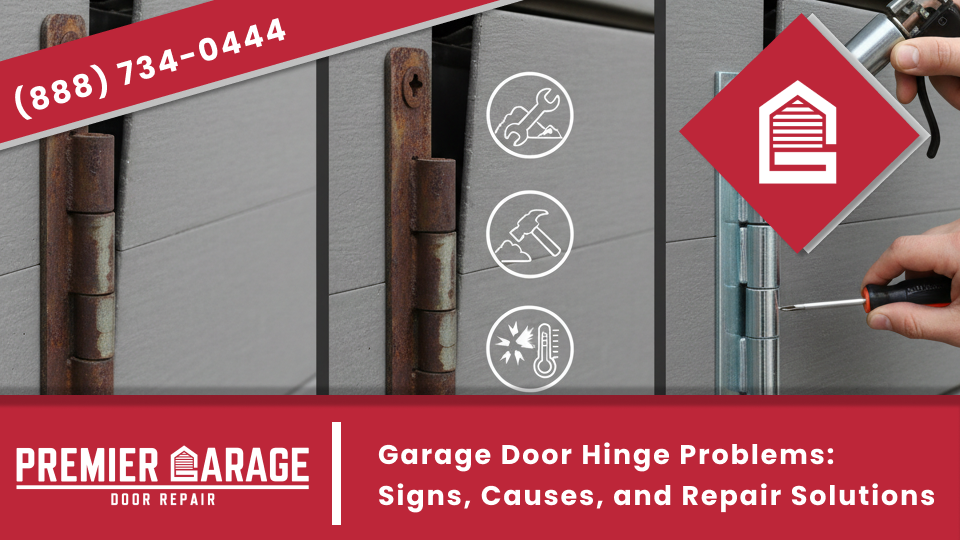
Furthermore, you should inspect hinges for obvious problems. First, look for cracks in the hinge body. Additionally, check for bent or twisted hinge plates. Also, watch for missing or loose mounting screws. Furthermore, note any rust or corrosion on hinge surfaces. Finally, inspect for elongated screw holes in panels. Often, a visual inspection reveals garage door hinge issues before complete failure.
Damaged Garage Door Hinge: Operational Problems
Additionally, performance issues signal hinge trouble. First, the door binds at certain points during travel. Also, uneven movement occurs throughout operation. Additionally, the door wobbles or shakes. Furthermore, panels twist during opening or closing. Finally, increased effort is needed to operate the door manually. Generally, these symptoms suggest garage door hinge problems affecting overall system performance.
Common Causes of Broken Garage Door Hinge
Understanding what causes a broken garage door hinge helps with prevention and repair decisions.
Garage Door Hinge Problems from Normal Wear
Naturally, daily use gradually weakens hinges over time. First, thousands of flex cycles occur each year. Additionally, metal fatigue develops from repeated bending. Furthermore, bearing surfaces wear from friction. Also, screw holes enlarge over time. Generally, the average lifespan runs ten to fifteen years with proper maintenance. Eventually, normal wear creates garage door hinge issues in any system.
Garage Door Hinge Issues from Rust and Corrosion
In addition, moisture damages metal hinges in several ways. First, rain exposure affects exterior surfaces. Additionally, humidity in unventilated garages causes problems. Furthermore, salt air in coastal areas accelerates corrosion. Meanwhile, winter road salt splash damages hinges in northern climates. Finally, condensation from temperature changes adds moisture exposure. Consequently, rust weakens hinges, leading to damaged garage door hinge failures.
Broken Garage Door Hinge from Impact
Meanwhile, physical damage accelerates failure quickly. First, vehicles bumping into the door cause immediate harm. Additionally, objects striking door panels create stress. Furthermore, improper manual operation damages hinges. Also, forcing the door past obstructions causes failure. Finally, children hanging on the door creates dangerous strain. As a result, impact damage causes immediate broken garage door hinge situations.
Damaged Garage Door Hinge from Improper Installation
Furthermore, installation errors cause ongoing problems. First, using the wrong hinge number creates issues. Additionally, incorrect screw length compromises mounting. Also, improper screw placement weakens the connection. Furthermore, missing screws at installation reduce stability. Finally, hinges that are not properly seated fail prematurely. Ultimately, poor installation leads to early garage door hinge problems.
Lack of Maintenance
Finally, neglect accelerates wear significantly. First, lack of lubrication causes friction. Additionally, loose screws never get tightened. Furthermore, early wear signs go ignored. Also, rust spreads when not addressed. Finally, problems compound over time. Therefore, regular maintenance prevents many garage door hinge issues.
Why Garage Door Hinge Repair Matters
Importantly, timely garage door hinge repair protects your entire door system.
Preventing Panel Damage
Specifically, failed hinges damage panels in several ways. First, panels crack around the hinge mounting. Additionally, screw holes tear through panel material. Furthermore, panel edges bend from stress. Also, panel replacement eventually becomes necessary. Finally, costs escalate significantly when panels need replacing. Therefore, garage door hinge fix work prevents expensive panel damage.
Avoiding Secondary Component Damage
In addition, hinge problems stress other parts of the system. First, rollers wear unevenly when hinges fail. Additionally, tracks bend from misalignment. Furthermore, cables experience uneven loading. Meanwhile, the opener motor strains under increased resistance. Finally, hardware loosens from extra vibration. Consequently, garage door hinge service protects related components.
Safety Considerations
Most importantly, broken garage door hinge situations create real hazards. First, panels can separate unexpectedly. Additionally, the door may bind and release suddenly. Furthermore, falling door risk increases significantly. Also, pinch points become more dangerous. Finally, door behavior becomes unpredictable. Therefore, garage door hinge replacement maintains safe operation.
Garage Door Hinge Repair Options
Generally, several approaches address garage door hinge problems depending on severity.
Garage Door Hinge Repair: Tightening and Adjustment
First, for minor issues, several adjustments help. Additionally, you can tighten all hinge mounting screws. Also, replace stripped screws with larger diameter options. Furthermore, use longer screws if holes are enlarged. Then, adjust hinge position if needed. Finally, lubricate hinge pivot points. Often, simple adjustments provide effective garage door hinge fix for early-stage problems.
Garage Door Hinge Fix: Single Hinge Replacement
Next, when individual hinges fail, single replacement works well. First, identify the specific failed hinge. Additionally, match replacement to the correct hinge number. Then, remove the damaged hinge carefully. Furthermore, install the new hinge with proper hardware. Finally, test door operation after replacement. Typically, single replacement offers cost-effective garage door hinge repair.
Garage Door Hinge Replacement: Complete Set
Finally, the best long-term solution is full replacement. First, replace all hinges simultaneously. Additionally, this ensures consistent condition throughout the door. Furthermore, it provides an opportunity to upgrade hinge quality. Also, complete replacement addresses developing problems before they appear. Finally, this approach proves most cost-effective long-term. Generally, complete garage door hinge replacement provides the best results for older doors.
Choosing Quality Replacement Hinges
Notably, hinge quality affects garage door hinge service longevity.
Standard Hinges
First, standard hinges serve as the basic replacement option. Additionally, they suit light-duty residential use. Furthermore, they work well for lighter doors. However, they offer a shorter lifespan. Also, they remain the most affordable option. Finally, they prove adequate for standard installations.
Heavy-Duty Hinges
Next, heavy-duty hinges offer upgraded performance. First, they feature thicker gauge steel. Additionally, they include larger bearing surfaces. Furthermore, they provide better rust resistance. Also, they deliver a longer lifespan. Finally, they come recommended for frequent use.
Commercial-Grade Hinges
Finally, commercial-grade hinges deliver premium durability. First, they feature the heaviest construction. Additionally, they offer maximum rust protection. Furthermore, they provide the longest service life. Also, they suit heavy doors best. Finally, they are worth the investment for demanding applications. Generally, quality hinges ensure lasting garage door hinge replacement results.
DIY vs Professional Garage Door Hinge Repair
Importantly, understanding when to call professionals ensures safe, proper garage door hinge fix.
DIY Garage Door Hinge Fix Appropriate For
Generally, some tasks homeowners can handle safely. First, tightening loose screws is straightforward. Additionally, lubricating hinge pivot points is simple. Furthermore, visual inspection for damage requires no special skills. Also, replacing accessible bottom hinges is manageable. Finally, basic maintenance tasks fall within DIY range.
Professional Garage Door Hinge Replacement Needed For
However, you should call professionals in several situations. First, when hinges sit near cables or springs, expert handling is essential. Additionally, multiple hinges requiring replacement need professional attention. Furthermore, panel damage that has occurred requires expertise. Also, doors that bind or move off-track need professional repair. Finally, any safety concerns warrant a professional call. Specifically, professional garage door hinge service ensures safe, proper work.
Risks of Improper Repair
Unfortunately, DIY attempts can cause serious problems. First, springs remain under dangerous tension during work. Additionally, using the wrong hinge number causes malfunction. Furthermore, improper installation leads to premature failure. Also, panel damage results from incorrect technique. Finally, safety mechanisms can be compromised. Therefore, when uncertain, professional garage door hinge repair near you provides safer results.
Finding Garage Door Hinge Repair Near You
When garage door hinge problems require professional attention, choosing qualified service matters.
What to Expect from Professional Service
Specifically, when scheduling garage door hinge repair near you, expect thorough work. First, technicians complete an inspection of all hinges. Additionally, they assess panel condition. Furthermore, they recommend repair or replacement options. Also, they provide a written estimate before work begins. Then, quality installation follows. Next, they test door operation. Finally, they clean up the work area before leaving.
Finding Quality Garage Door Hinge Repair Near You
Additionally, look for these qualifications when choosing a provider. First, verify the company is licensed and insured. Additionally, confirm experience with your door type. Furthermore, ask about quality hinge brands available. Also, check for positive customer reviews. Then, request written warranties on work. Finally, expect fair, transparent pricing.
Garage Door Hinge Service Cost Considerations
Generally, garage door hinge replacement costs vary by service type. First, hinge tightening or adjustment runs fifty to one hundred dollars. Additionally, single hinge replacement costs twenty to fifty dollars per hinge. Furthermore, a full set of standard hinges costs one hundred to two hundred dollars. Also, a heavy-duty full set runs one hundred fifty to three hundred dollars. Finally, hinges plus panel repair can reach two hundred fifty to five hundred dollars or more.
Preventing Future Garage Door Hinge Problems
After garage door hinge repair, ongoing maintenance extends hinge life.
Regular Lubrication
First, keep hinges moving smoothly through proper lubrication. Additionally, apply silicone lubricant every six months. Furthermore, lubricate pivot points thoroughly. Also, wipe excess to prevent dirt buildup. Then, include lubrication in your regular maintenance routine. Finally, note any unusual resistance that develops.
Tighten Hardware Regularly
Next, prevent loosening issues with regular checks. First, inspect all hinge screws quarterly. Additionally, tighten any loose fasteners. Furthermore, replace stripped screws immediately. Also, use the proper screwdriver to avoid stripping. Finally, note screws that won’t stay tight for further investigation.
Monitor for Developing Issues
Additionally, catch problems early through regular observation. First, listen for new sounds during operation. Additionally, watch for panel gaps appearing. Furthermore, check hinges during seasonal maintenance. Also, note any binding or hesitation. Finally, address concerns promptly before they worsen.
Protect from Moisture
Finally, reduce rust and corrosion through preventive care. First, ensure proper garage ventilation. Additionally, address water intrusion sources promptly. Furthermore, apply rust inhibitor to hinges as needed. Also, repaint rusty hinges if needed. Finally, consider stainless steel for coastal areas with high salt exposure.
Final Thoughts on Garage Door Hinge Problems
Garage door hinge problems affect panel alignment, smooth operation, and ultimately the safety and longevity of your entire door system. A broken garage door hinge or damaged garage door hinge creates garage door hinge issues that worsen over time, eventually causing panel damage and safety hazards.
However, recognizing the signs of hinge wear early allows for timely garage door hinge repair or garage door hinge replacement before minor issues become major expenses. Specifically, a professional garage door hinge fix using quality hinges restores safe, smooth operation.
Therefore, don’t let worn hinges damage your door panels or compromise safety. Quality garage door hinge service protects your investment and ensures reliable performance. Schedule garage door hinge repair near you with qualified technicians to address hinge problems before they escalate.
Phone: (888) 734-0444
Email: info@premiergaragerepair.net
Website: https://www.premiergaragerepair.net/